
Connection Starts with Positioning
As adults, it can sometimes feel surprisingly hard to get a child’s attention. From a child’s point of view, adults tower over them. We may find ourselves talking, prompting, or calling a child’s name—only to feel ignored or unacknowledged.
Using Naturalistic Developmental Behavioral Interventions (NDBI), including the Early Start Denver Model (ESDM), we focus on building engagement through natural, meaningful interactions. One of the simplest and most effective ways to increase attention and social communication is through intentional positioning of our bodies and materials during play and daily routines.
When positioning is supportive, social interactions are much more likely to occur. Children are more likely to:
Look at our face and eyes
Notice facial expressions
Share smiles and affect
Engage in back-and-forth communication
And best of all, this happens naturally—without holding toys up to your face (which can feel awkward and unnatural for everyone!).
What Does “Positioning” Mean?
Positioning means setting up the environment so your child can easily notice, attend to, and connect with you. Here are a few Springling Therapy–approved strategies rooted in ESDM principles:
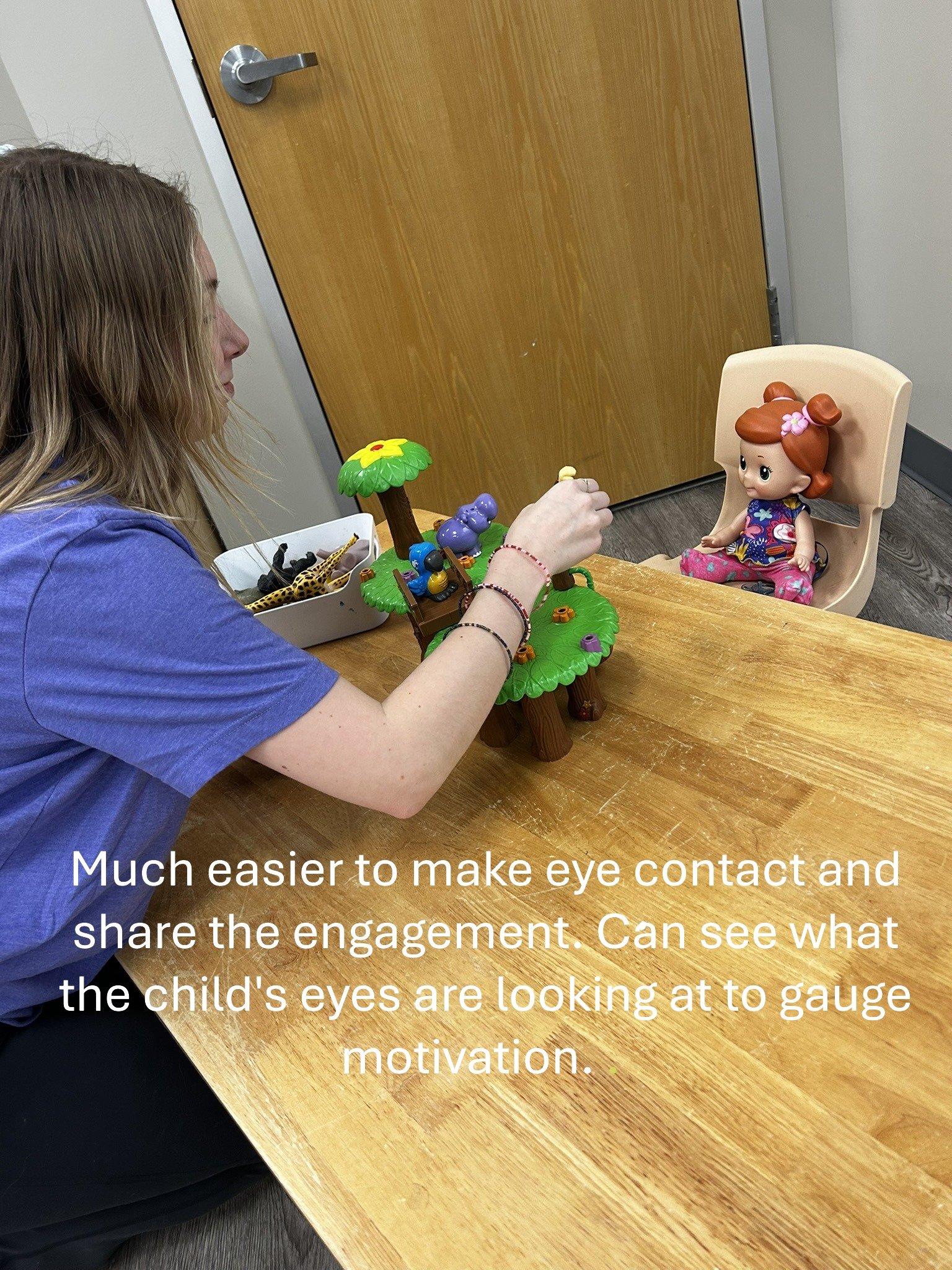
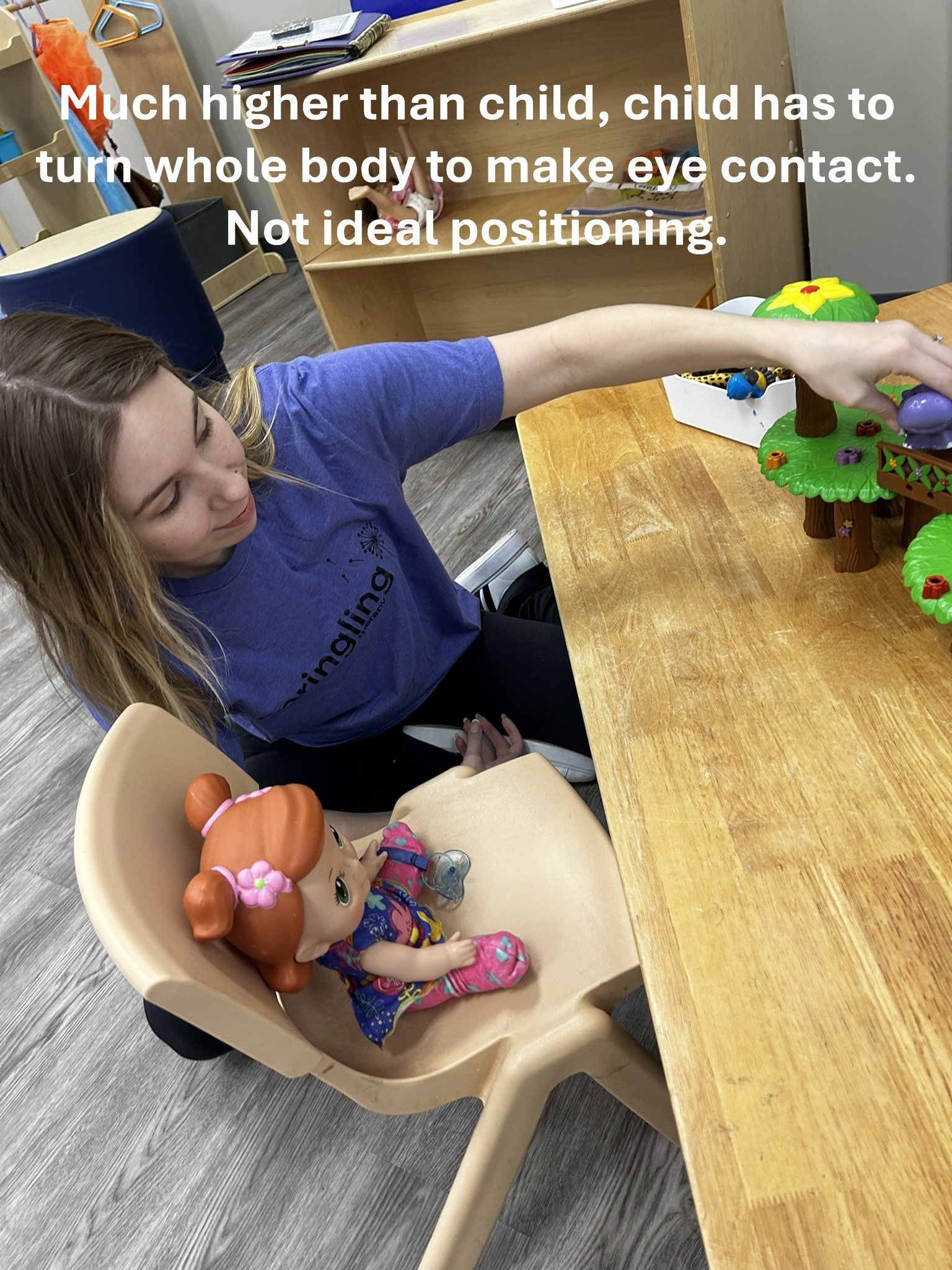
1. Get Down to Your Child’s Level
This may feel awkward at first, but it’s incredibly powerful. Being face-to-face supports shared attention and engagement—key foundations of learning in ESDM.
You can:
Sit on the floor with your child in front of you
Kneel if your child is standing
Position yourself close if your child is laying down
It’s pretty hard to ignore someone who is right in your visual field!
2. Support Comfort and Stability
If your child is leaning on furniture or appears wiggly or distracted, try adjusting their position to help them feel grounded.
For example:
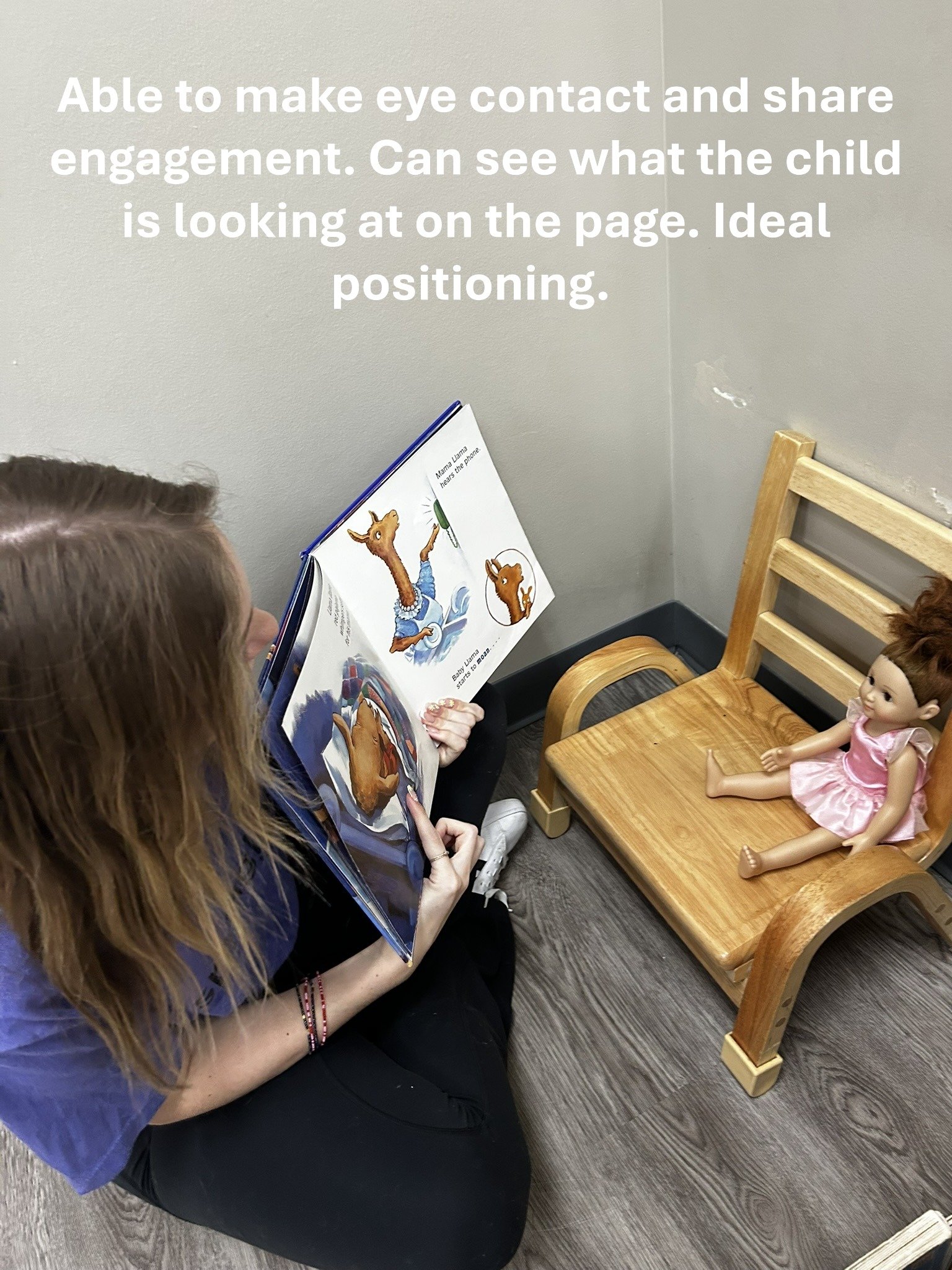
Sit your child in a small chair while you sit on the floor in front of them at eye level. Feet on the ground really helps “root” their body.
Make sure their body feels supported and secure
When children feel comfortable and stable, they’re more available for social engagement and learning.
3. Rethink Cuddling During Books
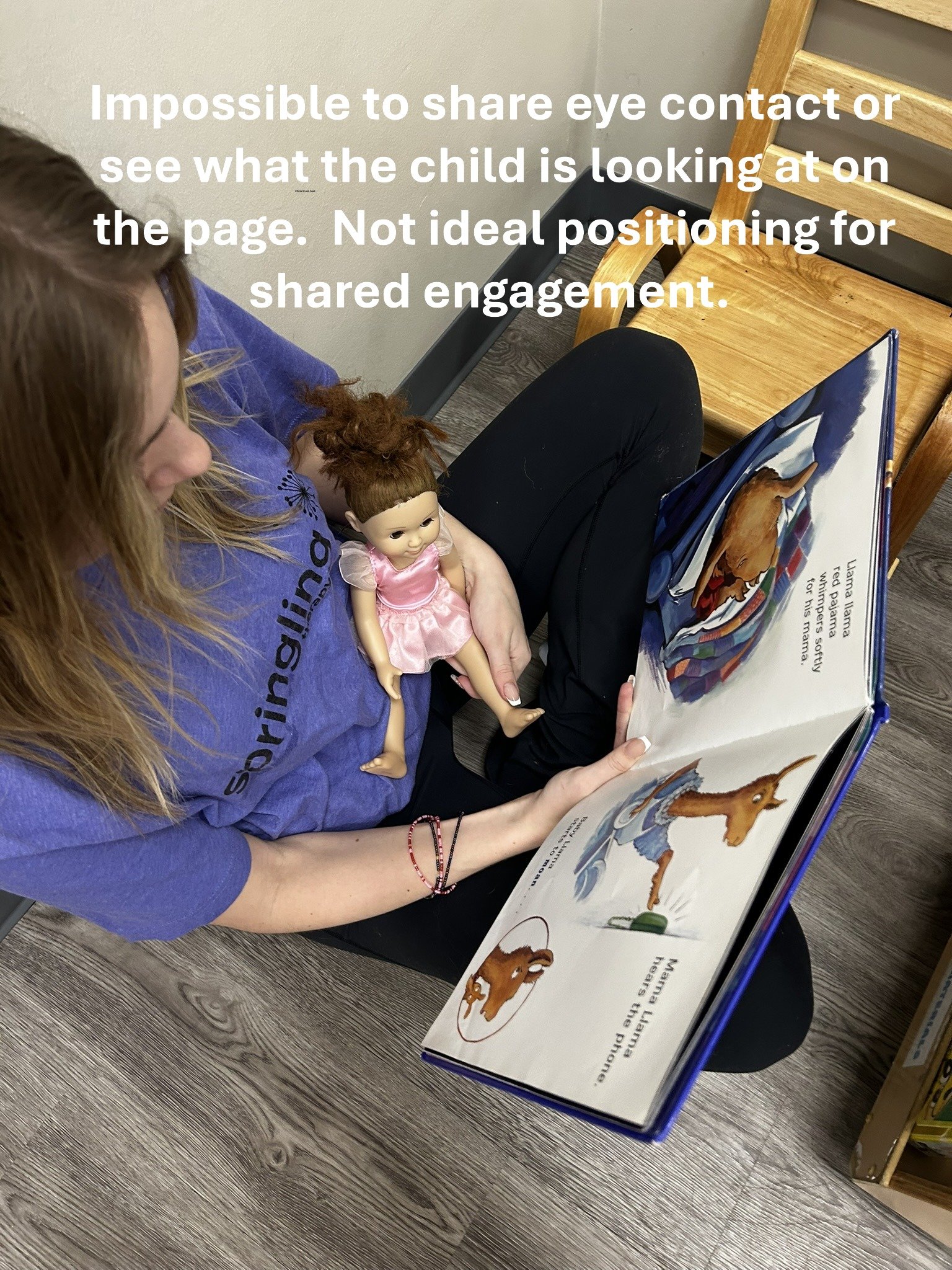
Snuggling while reading feels wonderful, and connection is always important. But, it doesn’t always allow your child to see your facial expressions.
To support communication development:
Try placing your child in a bean bag or chair in front of you
Sit at their eye level while reading
This allows your child to enjoy the story and observe your facial expressions, mouth movements, and emotions—important components of early social communication emphasized in ESDM. This doesn’t mean to remove the snuggly reading times, just save those for when you are winding down for bedtime or relaxing without the emphasis on shared engagement.
Why Positioning Matters
At Springling Therapy, our ESDM-based approach emphasizes learning through shared joy, connection, and play. Thoughtful positioning helps create opportunities for:
Joint attention
Imitation
Language development
Strong, positive social interactions
It’s a small adjustment that can make a big difference—without adding pressure or expectations for your child.
Parent Takeaway 💡
If your child seems “not attentive,” pause and ask yourself:
Can my child easily see my face?
How hard do they have to work to look towards me?
Am I at their eye level?
Is their body comfortable and supported?
Often, improving attention doesn’t require more prompting, it just requires a change in how we position ourselves. We believe that when we meet children where they are, literally and developmentally, connection comes first, and learning naturally follows.
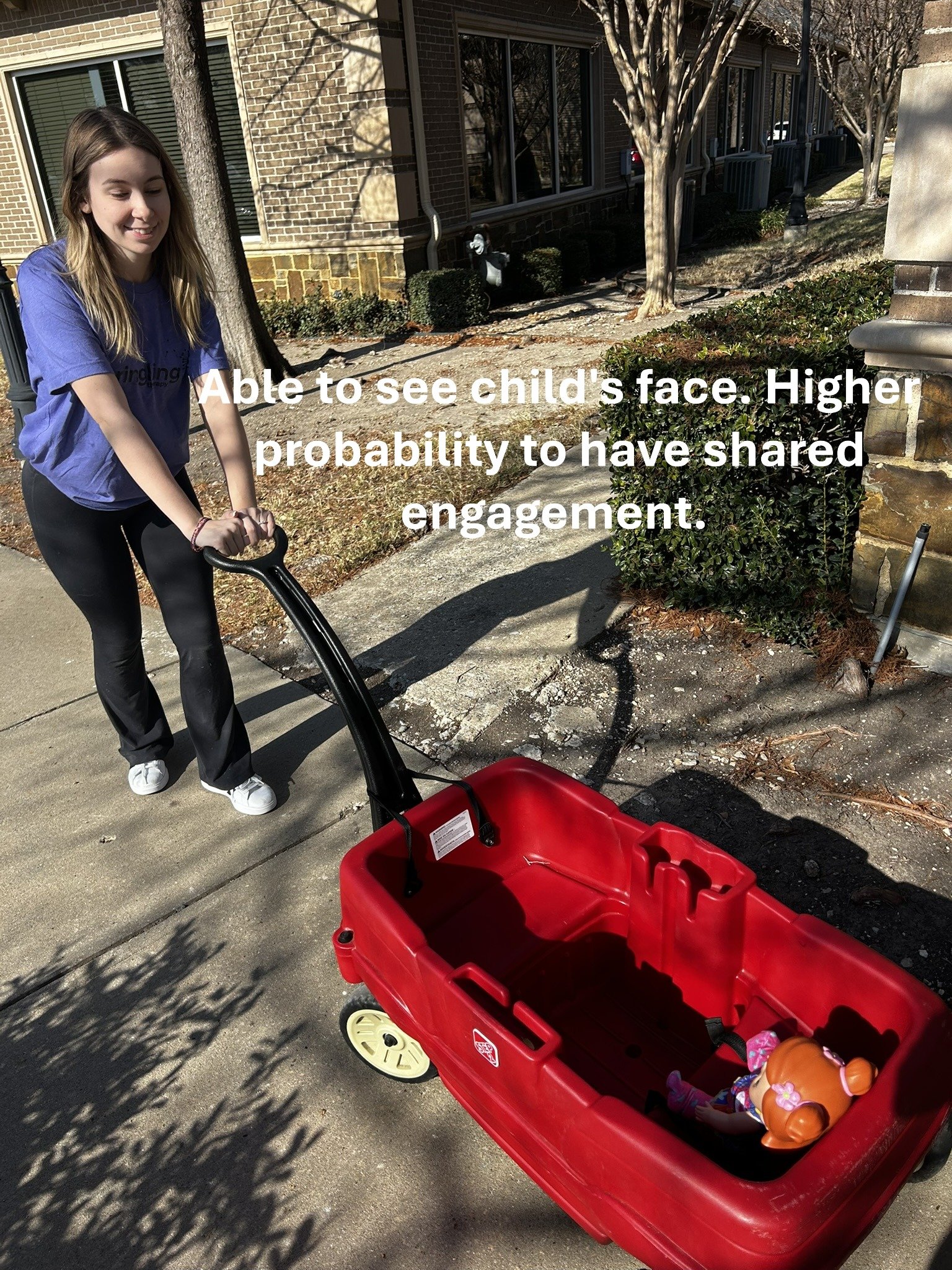
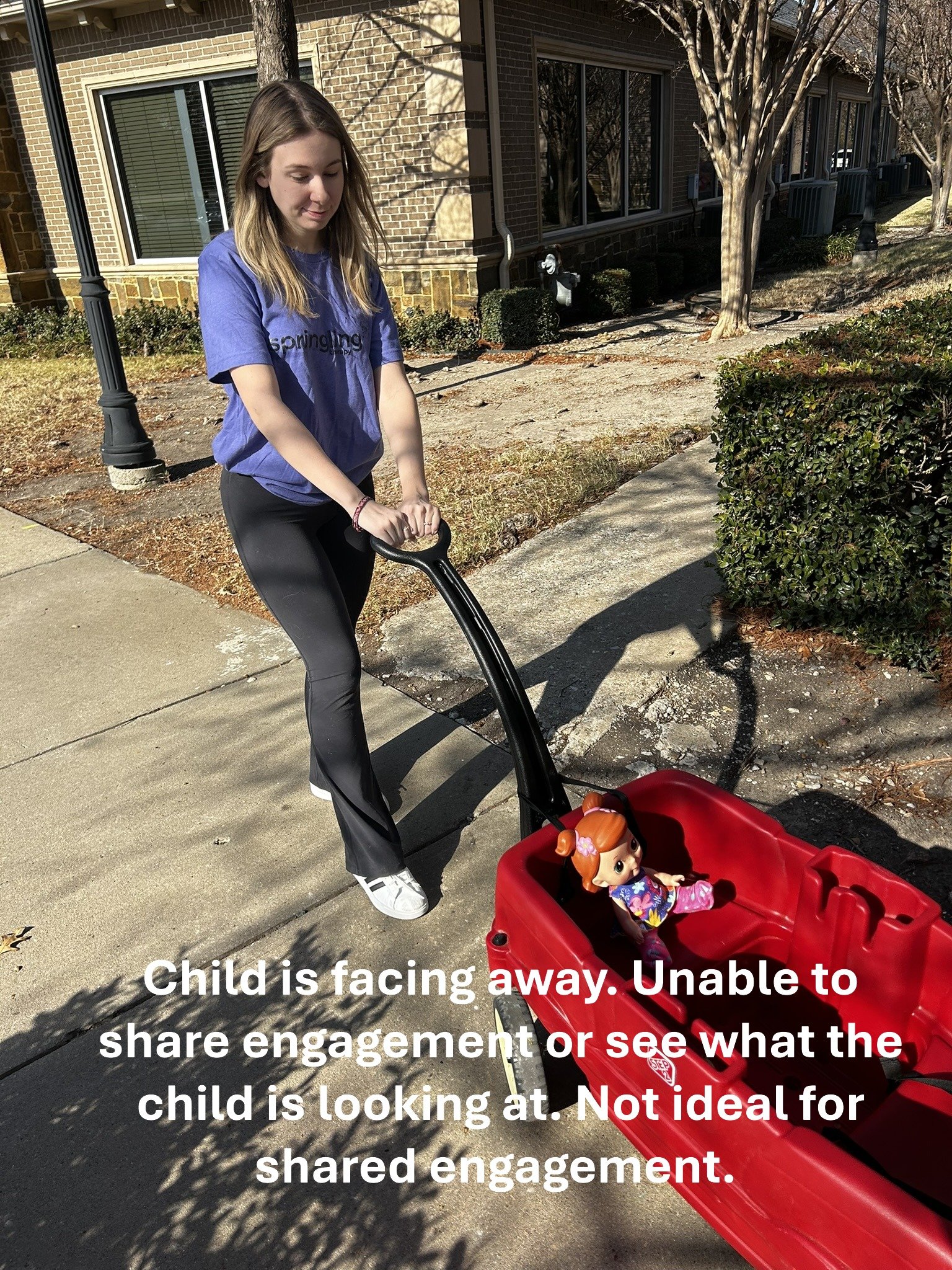
Below are examples of supportive positioning versus common “no-no’s” when it comes to building attention and engagement.
Cheering you on,
Cheyenne
A big “Thank You” to our RBT Logan who helped out with the photos for this blog.