Simplify the Moment, Strengthen the Connection
When we want children to learn something new, whether it’s a word, a gesture, or a social skill, our instinct is often to add more. More toys. More prompts. More talking. More, more, more.
But in the Early Start Denver Model (ESDM), one powerful strategy teaches us to do the opposite. Yes, you read that right, actually do the opposite.
Remove what competes with learning.
This is called “Eliminate the Competition” and it can make a big difference in helping children stay engaged, connected, and increase the opportunity for success.
What does “Eliminate the Competition” mean? Well, in our therapy world, competition refers to anything that pulls a child’s attention away from the interaction or learning moment. Young children, especially those with learning differences, are constantly deciding where to focus their attention. If too many things are happening at once, engagement becomes much harder.
Eliminating the competition means:
· Reducing distractions
· Simplifying the environment
· Making you or the activity the most interesting option
When attention is clear and focused, engagement becomes easier and more natural.
Strategies to help Eliminate the Competition.
1. Offer fewer choices
· Instead of presenting many options, choose 1-2 toys at a time.
· Less choice often leads to more engagement and longer play duration with the current item.
Quality play and engagement > quantity of toys.
2. Control the environment
· Turn off background noise (TV)
· Sit on the floor face to face (see last blog about positioning for a refresher)
· Move unused items out of sight
· Use a play space that is free of extra items
You’re creating an environment where interaction stands out.
3. Become part of the fun! Don’t just be an observer of play.
· Holding pieces of a toy so child has to go through you to gain access
· Pause during a favorite action to provide opportunity for joint attention
· Make yourself necessary for the play to continue
When you control access, you naturally become the MOST engaging part of the activity.
4. Simplify your language
Too many words can compete with understanding.
· Use short phrases
· Highlight key words or vary your tone
· Pause to allow processing of information
What this looks like in real life: Imagine reading a favorite book together. Here’s some scenarios.
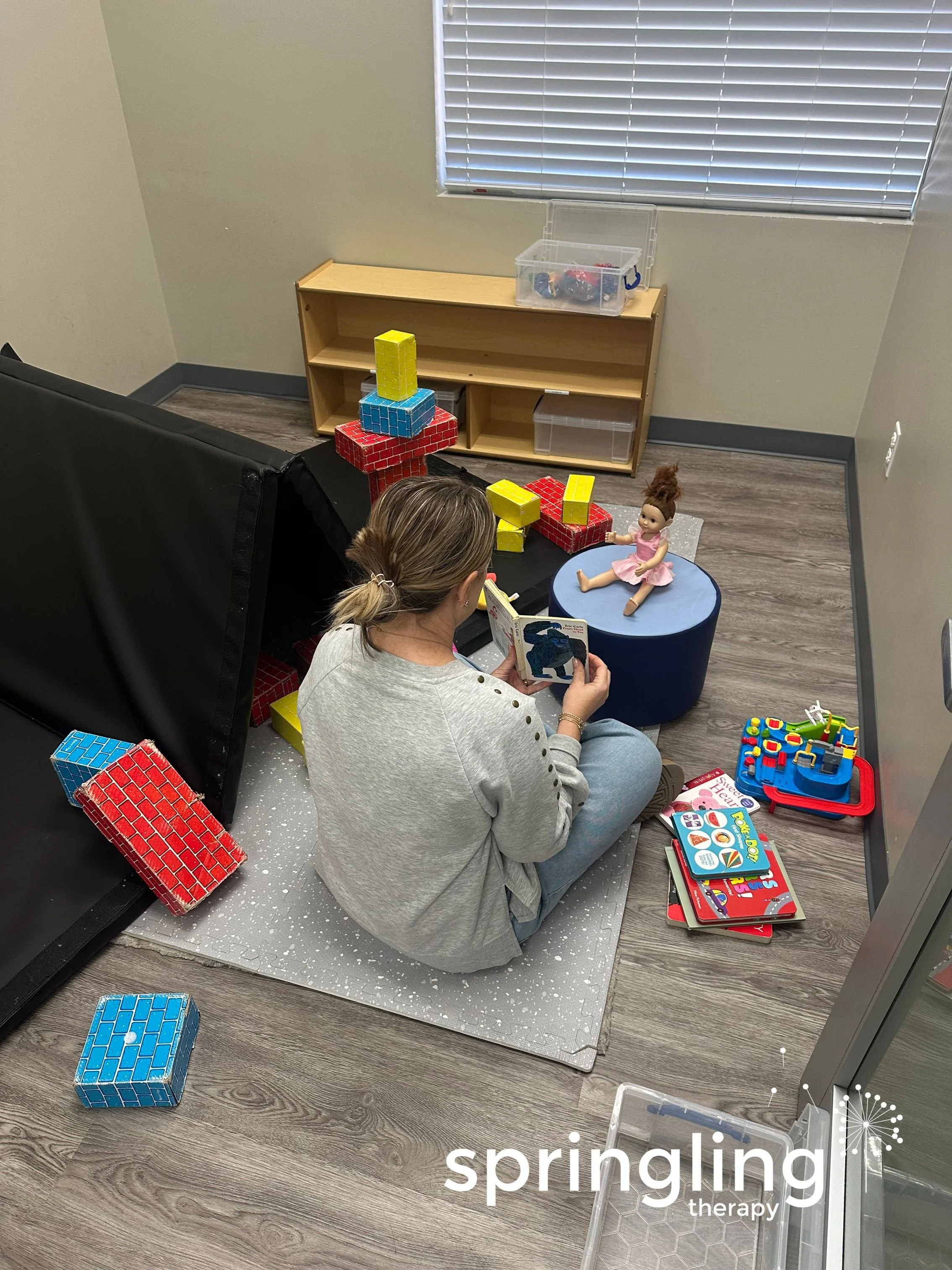
❌ The TV is on, several toys are scattered nearby, and the adult reads quickly word for word using the same tone while the child moves between available activities.
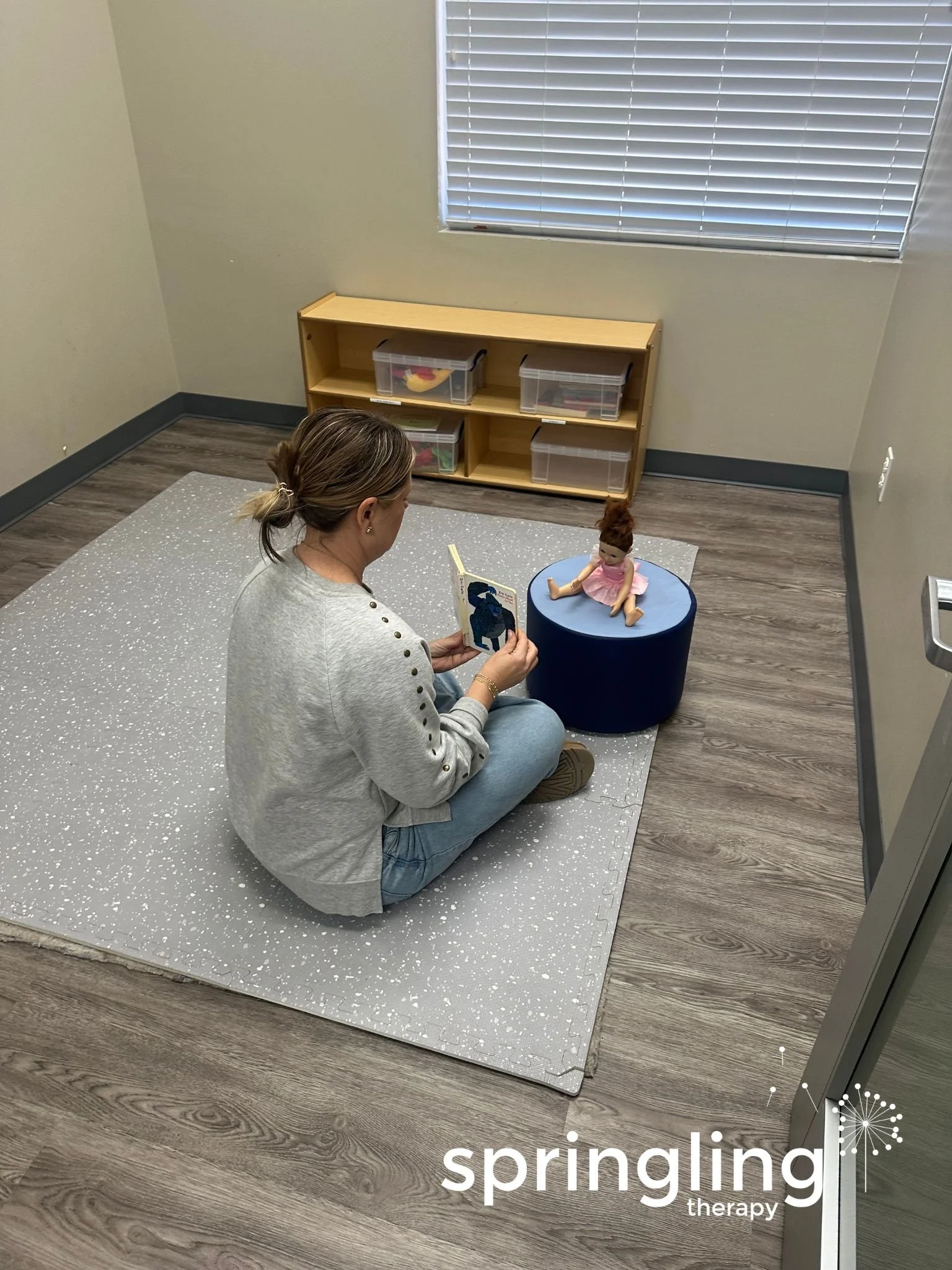
✅ The TV is off, only the book is available, the adult sits close – even across from the child, uses animated voice and pauses — making the interaction the most exciting option available in that moment.
Same book. Completely different learning opportunity.
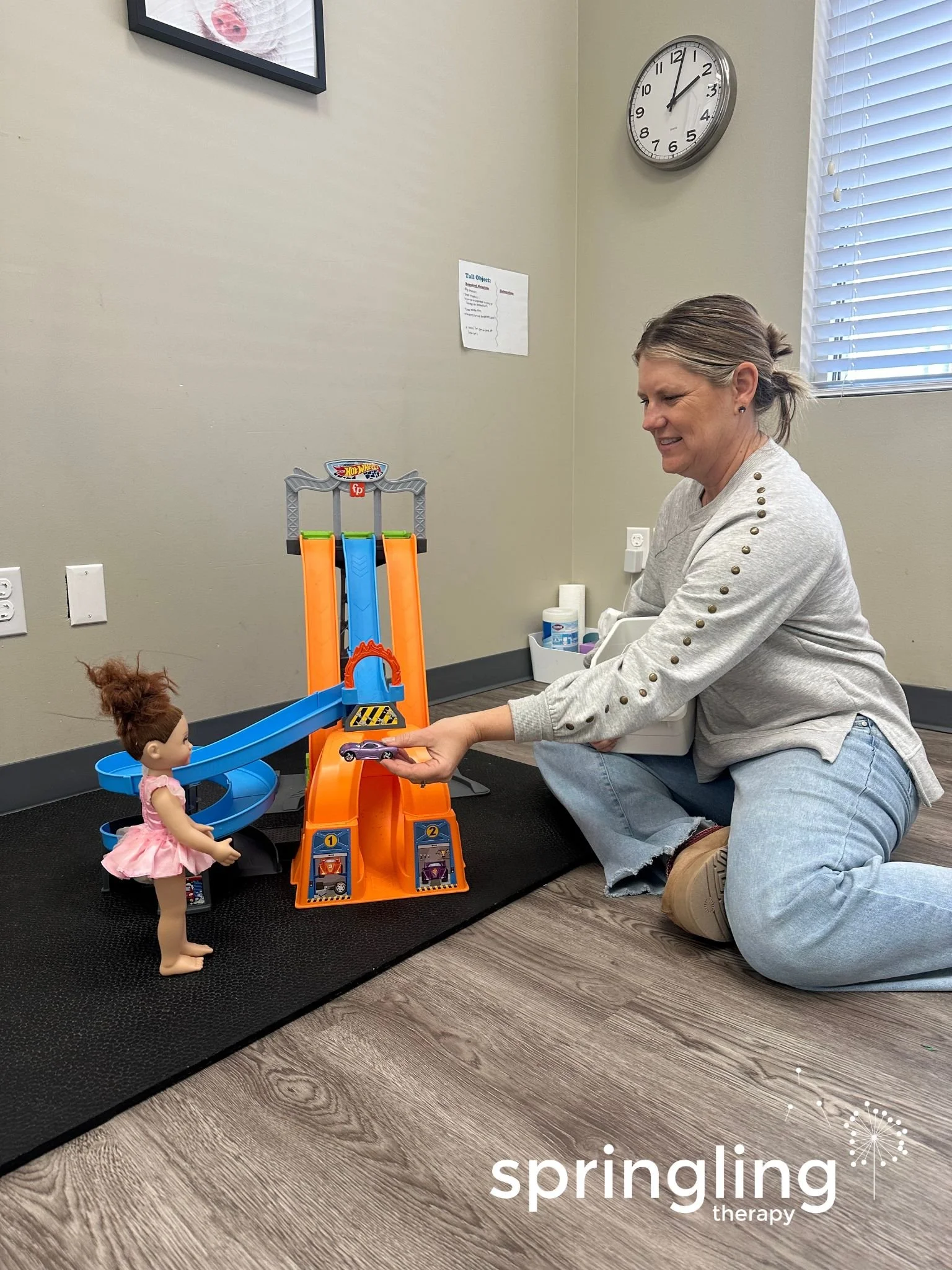
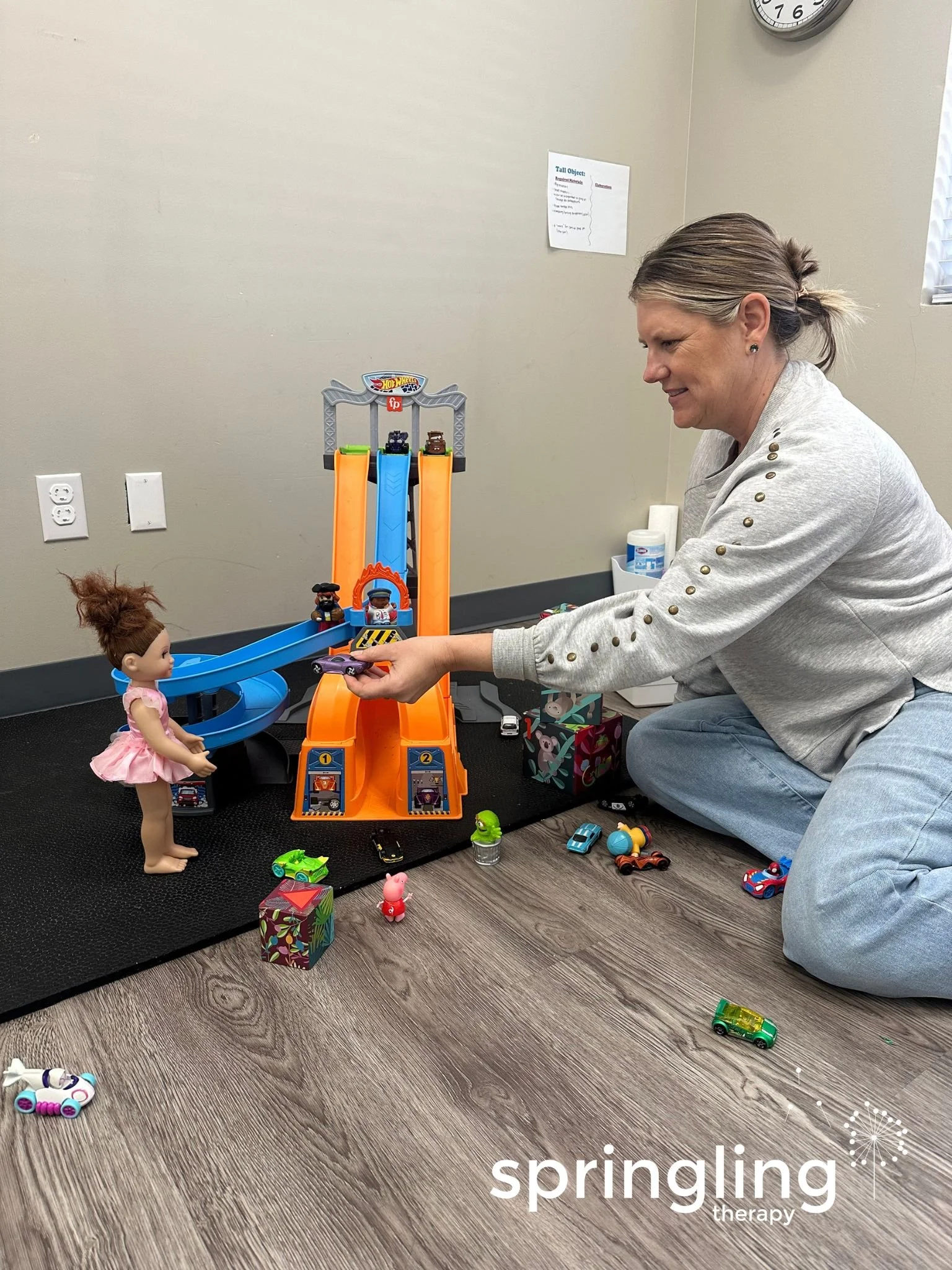
Look at the pictures below.
❌ You can see all the extra “unneeded” pieces in two of the pictures. These items cause distraction and decrease the child and adult’s engagement interactions. So many things available!
✅ Two pictures have only the necessary pieces to engage together. One picture even shows the adult holding the bin of extra cars increasing how much they are “needed” in the play.
Again, same activity. Completely different learning opportunities.
A Helpful Mind Shift
Instead of asking – “How do I get my child to pay attention?”, reframe the question to “What might be competing for their attention right now?”
Sometimes the most effective strategy is simply removing distractions so engagement can shine. When we eliminate competition, we make space for:
· Shared attention
· Communication
· Joyful interaction
· Meaningful learning
And in those moments of connection are where growth truly begins.
Give it a try,
Tessa