
The Magic of Books
“What is your favorite activity to do with a patient?”
This is an easy answer for me—and it’s also the same activity I prioritized with my own children: reading books.
When something is your favorite, you rarely skip it. That consistency is exactly what makes it so powerful within Naturalistic Developmental Behavioral Interventions (NDBI). Our patients need frequent, repeated opportunities to practice skills, and books naturally create those opportunities throughout the day.
Books are also incredibly practical—they grow with the child, travel easily, and can be used across settings with minimal preparation. Because of that, they are one of the most sustainable tools we have for building language, engagement, and shared attention.
At Springling, we think about early childhood books in four general categories:
Look Books
Sing/Song (Toddler) Books
Beginner Story Books
Story Books
Look Books are exactly what they sound like—books with minimal or no text and a strong focus on pictures. Some are centered around specific interests (like vehicles), while others organize pages by themes (like food or animals).
These books are great for children who enjoy labeling, are drawn to bright visuals, or benefit from sensory and motor elements like lifting flaps. They also work well for children who prefer to independently scan and explore.
The challenge is that they don’t always naturally support back-and-forth (dyadic) interaction, so the adult often needs to be more intentional in creating engagement opportunities.
Sing/Song (Toddler) Books are often the most powerful starting point—and they’re classics for a reason.
They are highly repetitive, predictable, and naturally invite a sing-song reading style. For children who benefit from a Gestalt language processing approach, these books are essential.
They make it easy to layer in sound effects, gestures, movement, and anticipation—and then repeat those experiences across multiple pages. That repetition is where a lot of learning happens.
Beginner Story Books represent an important transition.
For children who thrive on repetition, these can be harder to introduce because they often lack rhyme and predictable phrasing. The key is to go slowly and intentionally highlight elements your child already enjoys—whether that’s a character, action, or familiar routine.
These books are also incredibly useful for expanding play skills, as they often provide clear models for object use and simple sequences.
Story Books open the door to more complex learning opportunities.
They can be used to support emotional regulation, introduce social expectations, and expand imaginative play. They also allow you to explore new experiences and adventures in a structured, supportive way.
What matters most isn’t the book—it’s how you use it.
Books create a shared space where you can build attention, model language, and follow the child’s lead. Whether you’re labeling, pausing for anticipation, adding gestures, or acting things out, you’re turning a simple activity into a rich learning opportunity.
Let’s look at an example of each of the book categories.
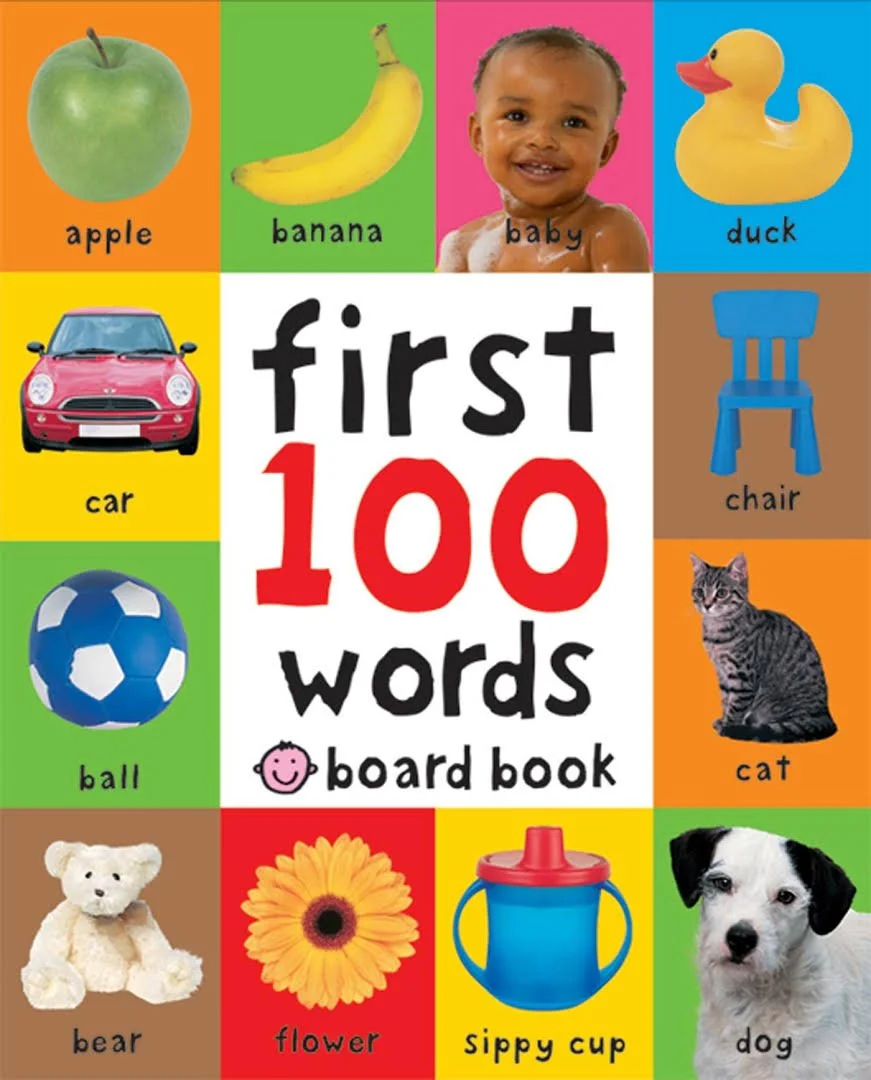
Look Book: First 100 Words
Why I love it:
Simple, clear pictures organized by category make this perfect for early learners and for following a child’s interests.
How I use it (NDBI in action):
I don’t try to go page-by-page. I let the child flip and land where they want—that’s my entry point.
Label what they look at (“car!”)
Pause and wait to see if they look back or vocalize
Expand if they’re ready (“fast car!”)
Create tiny routines (“ready…set…GO!” every time we find a vehicle)
What I’m targeting: joint attention, labeling, early requesting, shared engagement
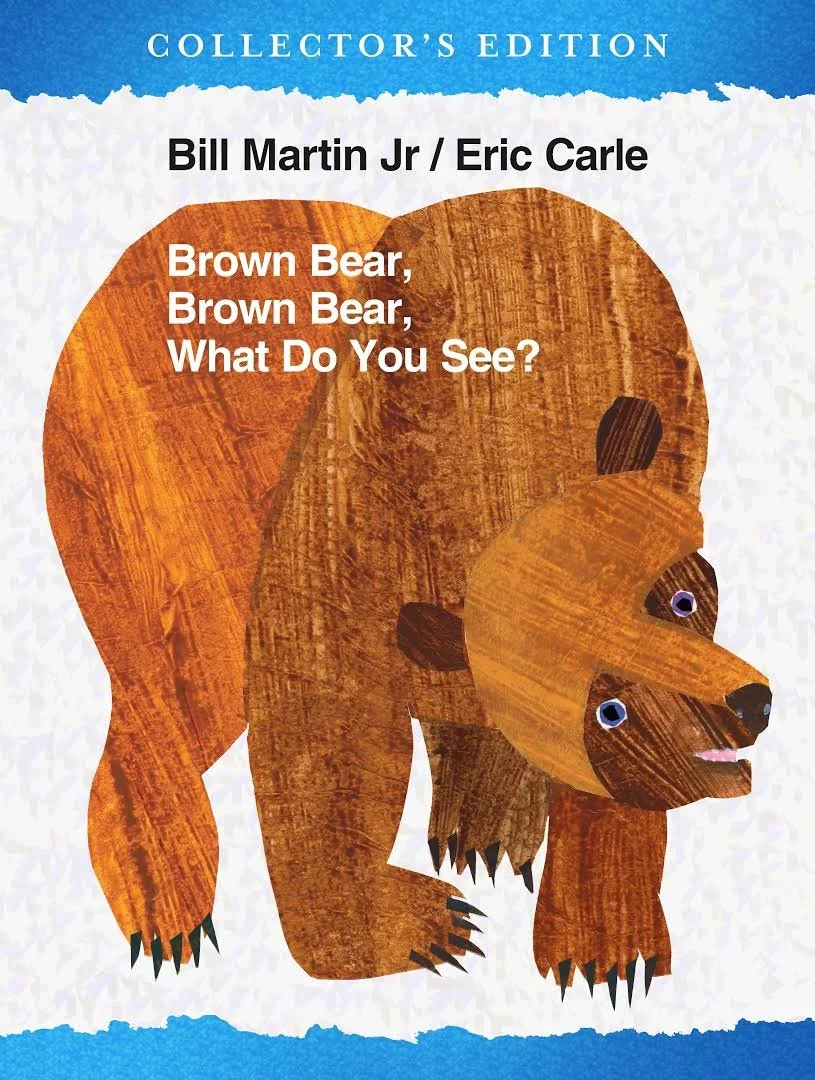
Sing/Song Book: Brown Bear, Brown Bear, What Do You See?
Why it works:
Repetition + rhythm + predictability = tons of opportunities for participation.
How I use it:
I don’t just read it—I set it up for the child to jump in.
Pause before the predictable phrase: “Brown bear, brown bear…” (wait)
Look expectantly and let them fill in anything (word, sound, gesture)
Add motions or sounds for each animal
Keep it playful and slightly dramatic to build anticipation
What I’m targeting: participation, vocalizations, gestalts, turn-taking
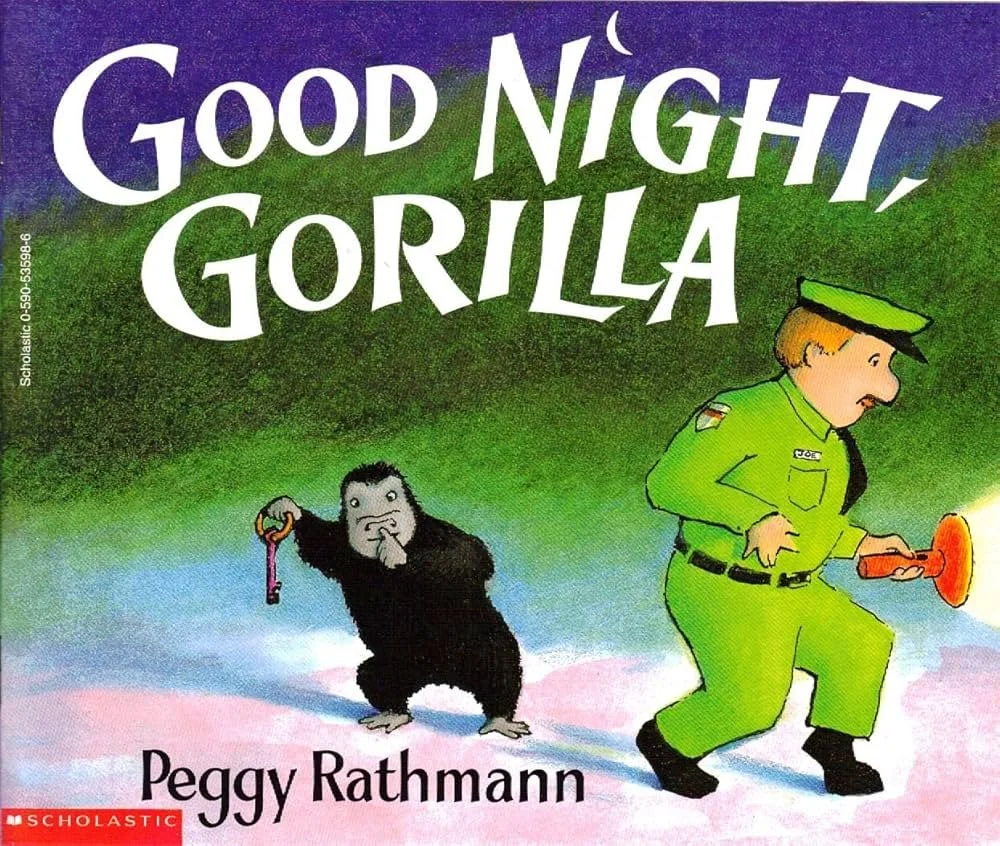
Beginner Story Book: Goodnight Gorilla
Why I love it:
There are very few words, which forces interaction instead of passive listening.
How I use it:
Narrate simply (“uh oh…gorilla!”)
Use exaggerated facial expressions and pauses
Act out parts with objects (walking, sneaking, sleeping)
Let the child “tell” the story through pointing, sounds, or actions
If a child struggles with traditional stories, this is a perfect bridge.
What I’m targeting: sequencing, joint engagement, symbolic play, communication without pressure
Make it stand out
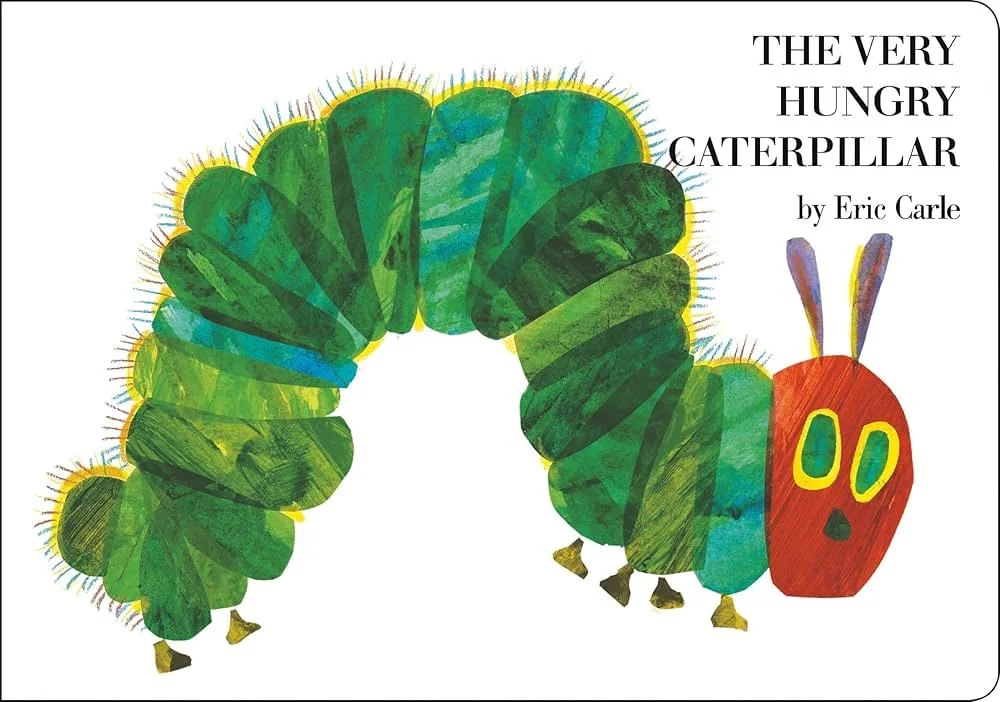
Story Book: The Very Hungry Caterpillar
Why it works:
It combines repetition with a simple story structure—great for expanding beyond toddler books.
How I use it:
Turn pages slowly and build anticipation (“what’s next?”)
Let the child poke fingers through the holes (motor + engagement)
Emphasize patterns (“he ate…”) and pause
Act out eating, feeling sick, turning into a butterfly
You can easily extend this into play after the book.
What I’m targeting: early sequencing, requesting, imitation, expanding play themes
The Bigger Point
You don’t need dozens of books—you need a few that you know how to use well.
If you’re reading the same book 20 times, that’s not a problem—that’s exactly where learning happens. The goal isn’t to “get through the book.” The goal is to create as many small, meaningful interaction opportunities as possible.
With gratitude, Carrie
Other books we love:
Polar, Bear, Polar Bear
Goodnight Moon
We’re all Wonders
My Friends
Jamberry
Knuffle Bunny
Guess how much I love you
But not the Hippopotamus
We’re going on a Bear Hunt
Down by the Bay
Where the Wild Things Are
Time for Bed
The going to bed book
Goodnight Train
100 First Words (Ms. Rachel)